
Margot joined Girls on the Run in 2004 as a sixth grader who didn’t love running and rarely finished near the front. What she remembers most isn’t her pace, but how she felt.
“It wasn’t about being the best,” explained Margot. “It was about being together.”
As we celebrate Women’s History Month and 30 Years of Building Confidence, Connection, and Community at Girls on the Run International, Margot’s story represents what lasting impact looks like. She started as a participant. She returned as a coach. Those seasons helped shape the leader she is today — at work, at home, and in her community.
The Lesson That Lasted
As a girl, Margot didn’t see herself as athletic. In other activities, performance was defined as success. Girls on the Run felt different.
“It felt welcoming and low-pressure,” she says. “It wasn’t centered on competition. The focus felt broader — about teamwork, connection, and personal growth.”
She remembers the after-school energy. The practice 5K. The nervous excitement at the starting line. However, she didn’t leave the experience thinking she was a runner.
“I didn’t leave the program thinking of myself as ‘a runner,’” she says. “But I did leave knowing I could stick with something challenging and finish it. That sense of belonging stayed with me longer than I realized.”
That distinction matters.
Girls on the Run is a physical activity-based youth development after-school program. Girls set goals. They track progress. They practice skills like encouraging others and resolving conflicts. The 5K gives them a tangible moment of achievement and proof that effort leads to growth.
That is what Girls on the Run delivers: a place where girls build confidence through progress and connection through teamwork.
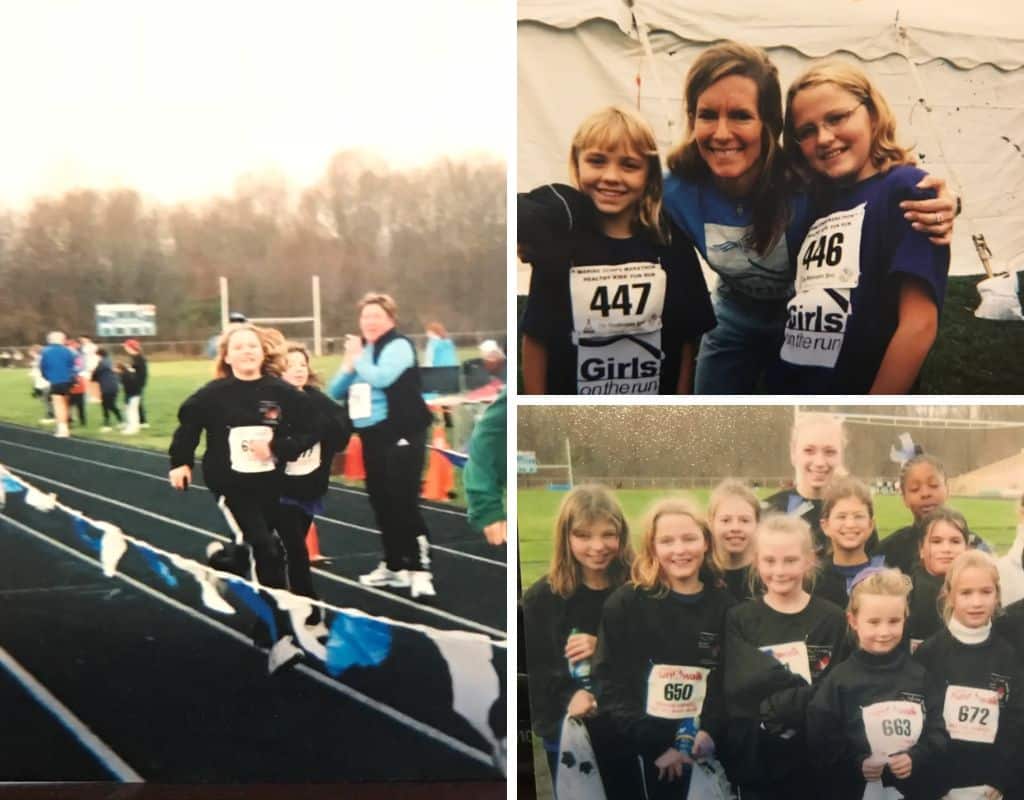
(Left) Margot smiles at a Girls on the Run 5K as a participant. (Top right) Founder Molly Barker (center) poses with Margot and a friend at the 5K Celebration. (Bottom right) Margot and her Girls on the Run team gather for a joyful team photo.
From Participant to Coach
Years later, while teaching elementary school in Philadelphia, Margot heard a colleague wanted to start a Girls on the Run team. She immediately volunteered to coach.
“I actually didn’t know Girls on the Run still existed,” she says. “But hearing the name brought back so many positive memories. I wanted our students to have that experience.”
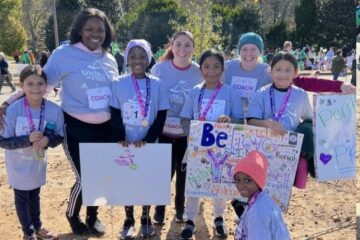
As a Girls on the Run coach, she saw the same transformation unfold. At the beginning of the season, some girls were unsure about running and about each other. Week by week, they opened up, they encouraged teammates, and they built friendships.
The end-of-season 5K Celebration made that growth visible.
“You could see how much they had grown — not just in endurance, but in confidence,” she says. “Watching them cross the finish line, proud of themselves, was incredibly meaningful.”
Then Margot made a decision that changed her own life.
“I didn’t want to just cheer,” she says. “I wanted to run with them.”
She trained outside of practice to complete the 5K alongside her team. Crossing that finish line shifted something.
“After that first 5K, I had a runner’s high and signed up for another race the following weekend!”
Since then, she has completed a variety of races, including other 5Ks and even completed a half-marathon. She returned to running after foot surgery. She ran through pregnancy. Today, she continues to run with her toddler in a jogging stroller.
Coaching didn’t just impact her students. It reshaped her life.
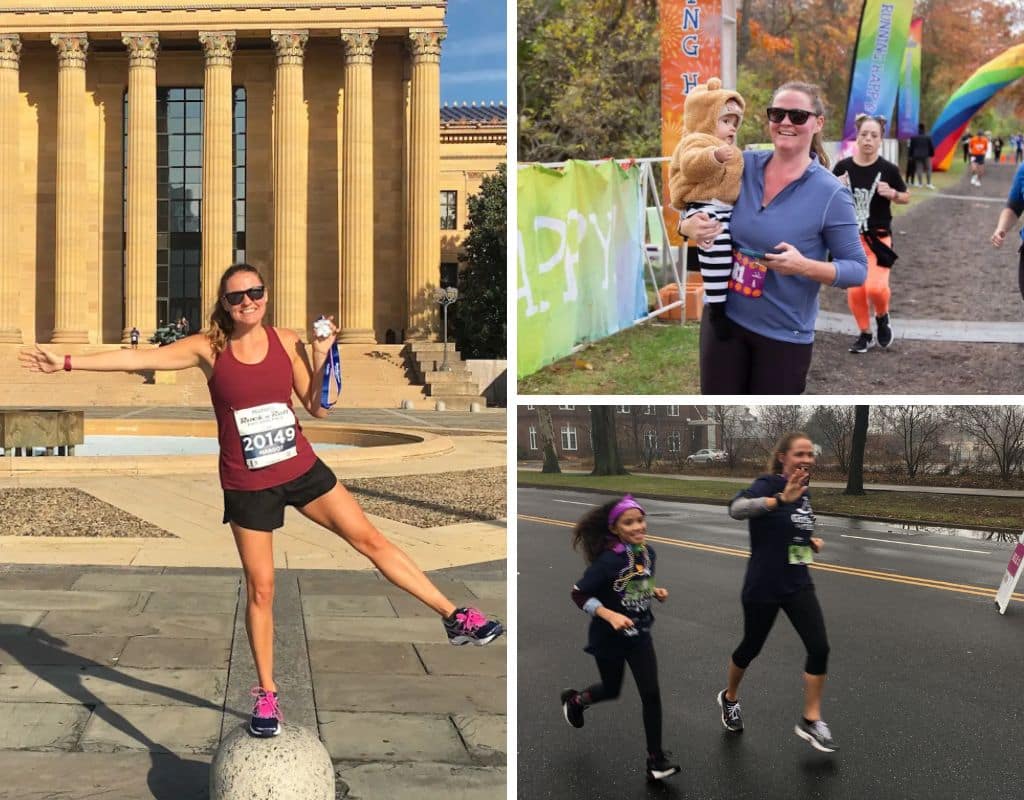
(Left) Margot strikes a pose and celebrates with her medal! (Right top) Margot and her daughter smile while jogging together. (Right bottom) Margot runs with a participant at the GOTR 5K.
Why Female Role Models Matter
Margot understands how powerful it is for girls to see strong women show up consistently.
“It matters a lot,” she says. “Seeing women prepared, supportive, and committed sends a quiet but powerful message about leadership. It shows girls that leadership doesn’t have to be loud or competitive. It can be steady and encouraging.”
As a participant, she felt the fun and support. As a coach, she understood the intention behind it.
“Stepping into that role made me realize how much responsibility goes into creating that kind of space,” she says. “I knew what it felt like to be the girl who wasn’t sure she belonged. Being able to create an environment where every girl felt capable felt meaningful.”
When former participants return as coaches, it signals something powerful.
“It shows the impact goes far beyond one season,” she says. “The program didn’t just create runners. It created leaders and mentors.”
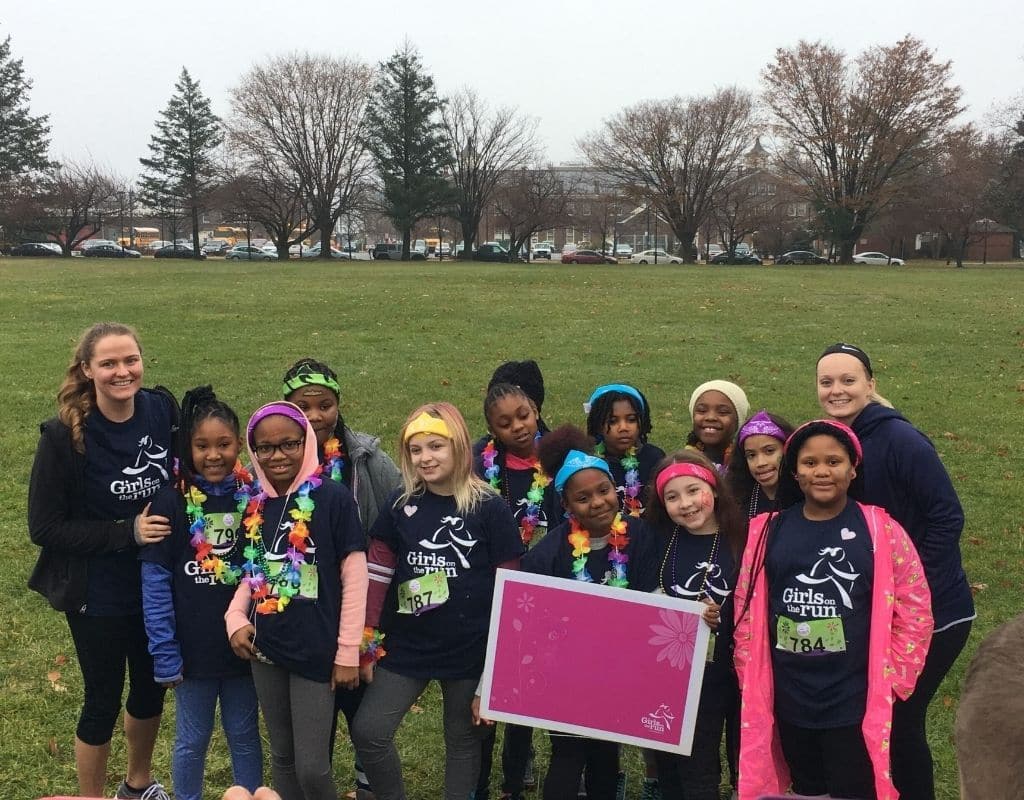
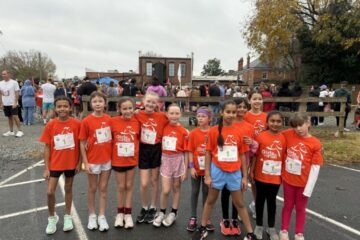
Margot and her Girls on the Run team come together for a joyful team photo!
30 Years and Still Growing
In 1996, 13 girls gathered for the first Girls on the Run season in Charlotte, North Carolina. Today, more than 2.7 million girls have participated across North America.
Margot’s story brings those numbers to life.
A girl who didn’t think she belonged learned she could do hard things. A teacher who introduced the program to her students and school. A coach who trained so she could run beside her team. A woman who now leads in her profession and her family — guided by perseverance, connection, and confidence.
As we celebrate International Women’s Day and 30 years of impact, we’re honoring women like Margot and the communities that shaped them.
Sign up for our newsletter to get 30th anniversary updates, stories, and ways to be a part of the year-long celebration.