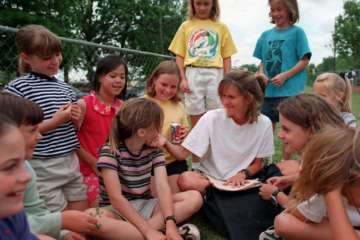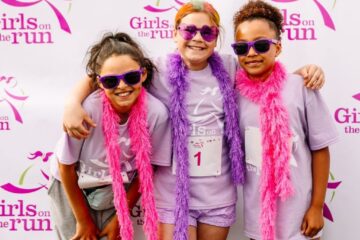

Thirty years ago, Molly Barker gathered with 13 girls in Charlotte, N.C., for the first season of Girls on the Run. That first practice has grown into an international movement, serving more than 2.8 million girls through 165 councils across the United States and Canada.
As we celebrate 30 years and look ahead to the future, Girls on the Run CEO Elizabeth Kunz is sitting down with some of the people who have helped shape the organization over the past three decades for Behind the Mission, a special conversation series reflecting on where we started, how we’ve grown, and what comes next.
For the first conversation, Kunz sat down with Girls on the Run founder Molly Barker to revisit those first practices in Charlotte, reflect on the organization’s growth, and talk about what she hopes the next 30 years will hold for Girls on the Run and the millions of girls still to come.
Elizabeth Kunz: Take us back to that first practice in 1996. What were you trying to achieve with the first team?
Molly Barker: I wanted to create a safe and brave space where girls could develop the confidence and strategies to decide for themselves who they wanted to be. Running was part of it, but it was never really about running. Running was the vehicle. I certainly wasn’t thinking about it becoming a national movement!
EK: What did you see in girls in 1996 that others weren’t paying attention to yet?
MB: When I started the program, my stepdaughter at the time was turning seven. She and her friends were funny, fierce, curious, and wise. I could see, even at that age, that some of her peers were beginning to edit themselves. They were already learning which parts of themselves were acceptable and which needed to “change” to fit in. They needed a place where they could practice trusting themselves before the limiting expectations showed up around them. That was really the beginning of Girls on the Run.
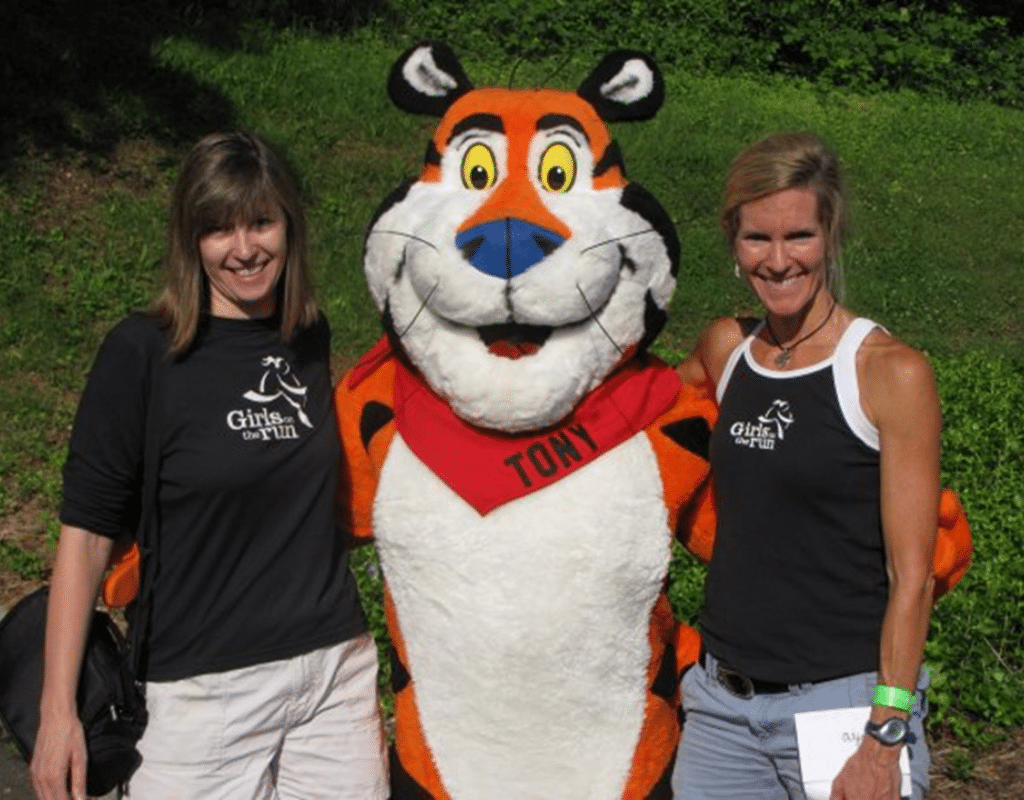
Elizabeth Kunz (left) and Molly Barker at a 2008 Girls on the Run 5K.
EK: What do you remember most about those early seasons?
MB: I remember how much fun we had. There was so much laughter and silliness and energy. I remember being surprised by how wise the girls were when we simply gave them the space to talk and be their whole, unfiltered selves.
EK: It sounds like there was something special happening from the very beginning. Girls on the Run has grown from one team into a nationwide movement. When did you first realize this was bigger than you?
MB: We were three years in. I was pushing my kids in the baby jogger, and it just hit me. By then, I had trained other coaches and expanded the program to a few other cities. I was watching these brilliant women take the curriculum and bring their own personalities and experiences to it — each in their own way, but with their understanding of what it was about. I remember thinking, “This is so much bigger than me. Maybe this could be everywhere!”
EK: Now, 30 years later, more than 2.8 million girls have participated in Girls on the Run. What emotions come up for you as you reflect on that impact?
MB: Mostly, I feel an enormous sense of gratitude. Thousands and thousands of coaches, volunteers, staff members, board members, parents, and communities took this idea, brought themselves to it, and carried it forward.
I also feel a sense of awe. When I think about 13 girls in Charlotte becoming nearly three million girls, it’s truly hard to comprehend. I honestly can’t wrap my head around that.
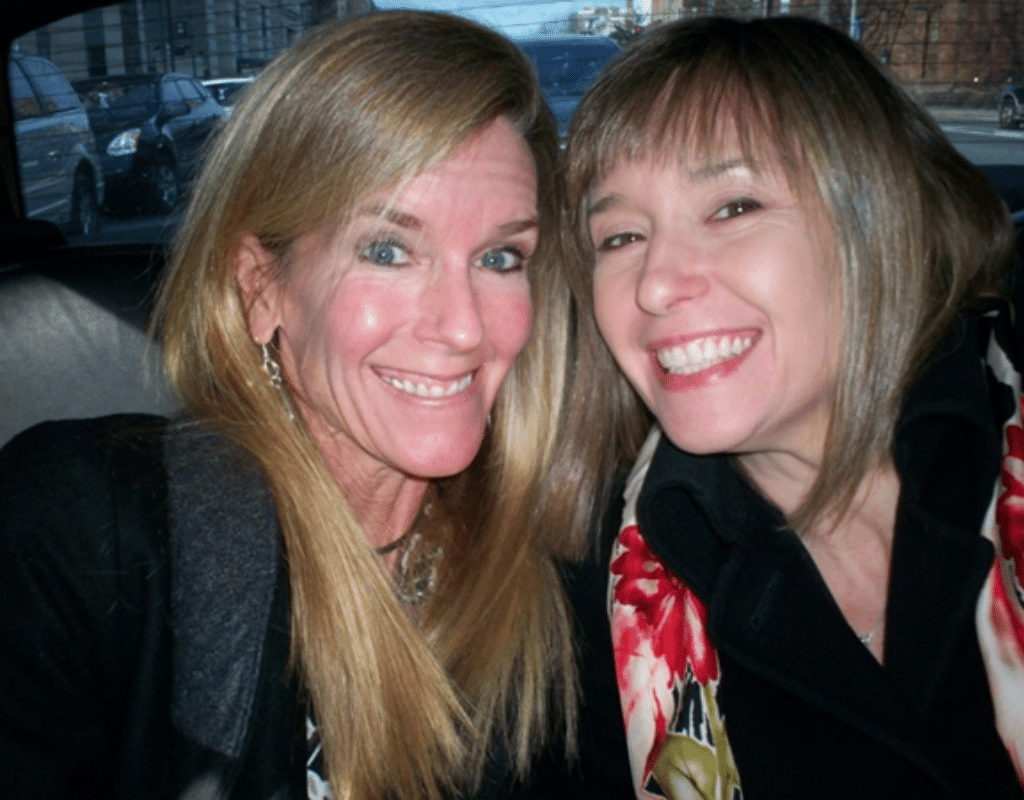
Molly (left) and Elizabeth in 2010.
EK: And while Girls on the Run has grown tremendously, the world girls are growing up in has changed, too. In what ways do you think the needs of girls today are different, and in what ways are they the same?
MB: The world girls are growing up in today is very different. They have access to possibilities, language, role models, and conversations that weren’t available to girls 30 years ago. Girls can see themselves in roles and spaces that were much harder to imagine back then.
In other ways, the pressure has intensified. Social media gives girls a 24/7 constant stream of images, opinions, and judgments about how they should look, what they should believe, how they should behave, and even how they should feel about themselves.
What hasn’t changed is the basic need underneath all of it. Girls need places where they can hear their own voices. They need adults who listen without immediately trying to fix or direct them. They need real relationships with other girls.
EK: Girls on the Run has evolved alongside girls and the world around them. As you’ve watched the organization change over the years, what has made you most proud?
MB: The organization has definitely become more sophisticated, more intentional, and more equipped to serve girls in very different communities. The curriculum has evolved as girls and the world around them have changed.
But honestly, what makes me proudest may be what hasn’t changed. If you go to any Girls on the Run practice, you’ll still see girls sitting in a circle, moving their bodies, laughing, talking, and figuring things out together. You’ll see coaches creating a space where girls can show up as themselves, where their voices matter, and where they are encouraged to decide for themselves who they want to be.
Thirty years later, thousands of coaches, volunteers, and staff continue to understand the heart of Girls on the Run. After all these years and all this growth, you can still find the essence of the program exactly how it began, in a circle of girls and the adults who believe in them.
EK: As we look toward the future, what are your hopes for the next 30 years of Girls on the Run and the millions of girls still to come?
MB: My biggest dream would be that girls grow up in a world where they don’t have to be taught that their voices matter, that their bodies belong to them, that they don’t have to change themselves to fit into somebody else’s idea of who they should be. I’m not sure we’ll ever get there, but my hope is that we keep moving closer, that we keep creating spaces where girls can be themselves, whole, unfiltered, and loved.
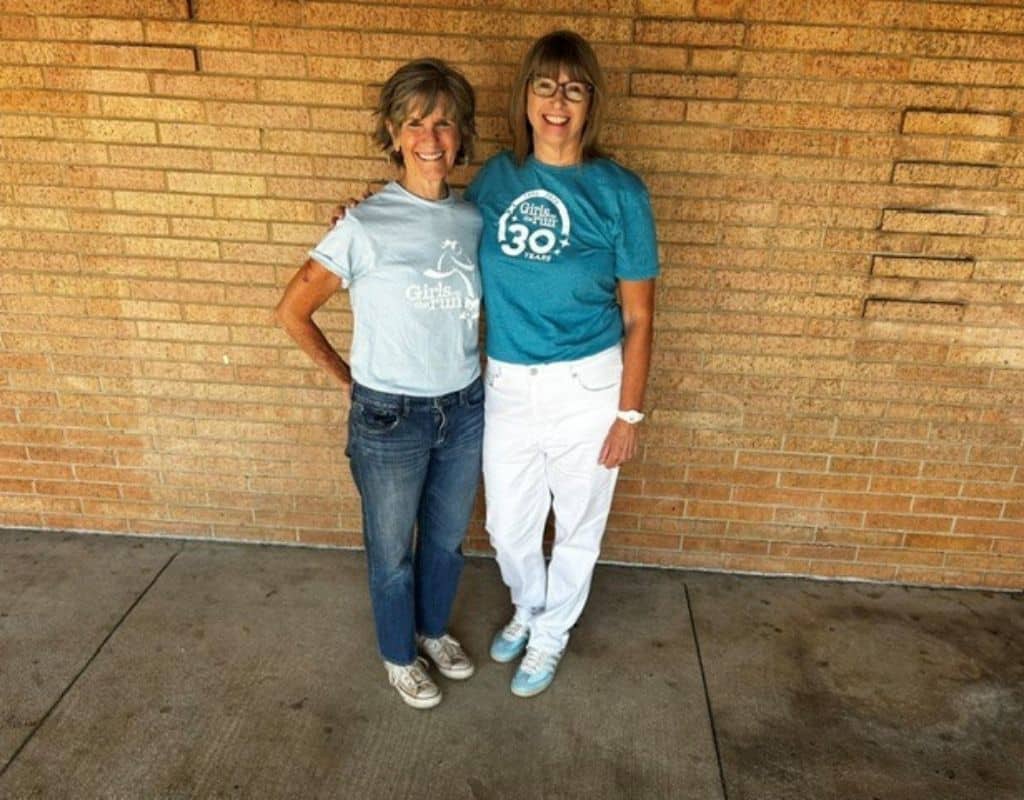
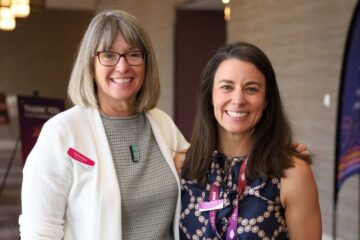
Molly (left) and Elizabeth in 2026.